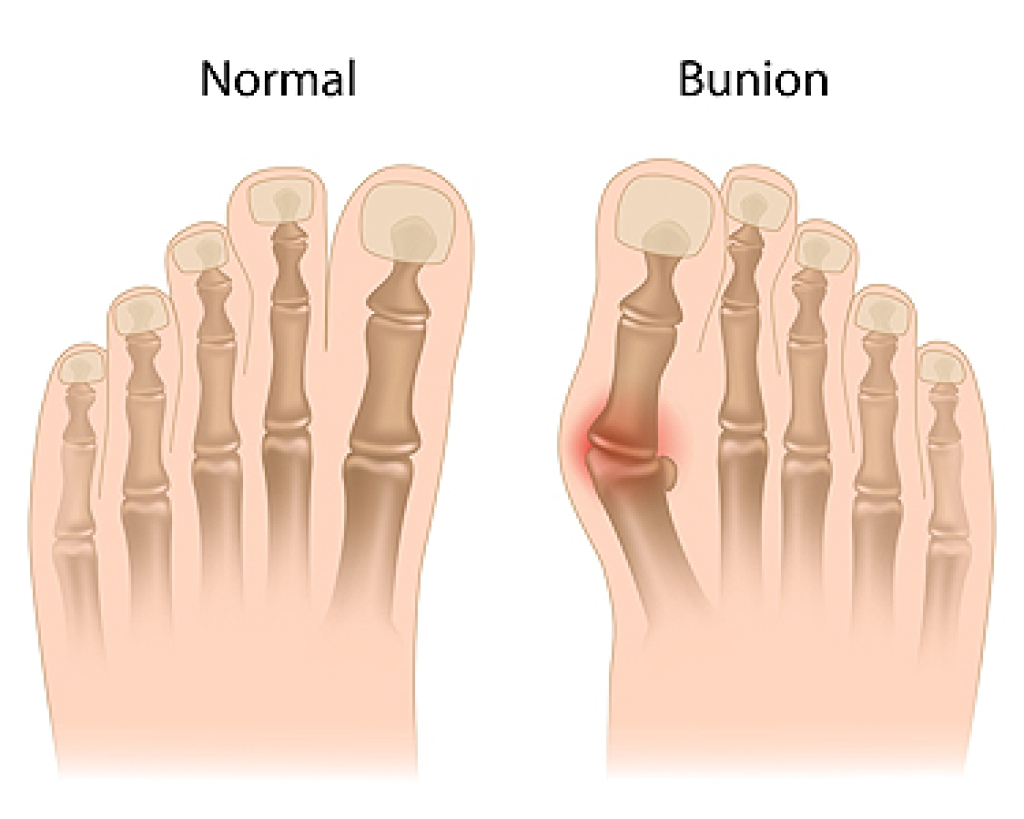
Unraveling the Causes of Bunions

Bunions, also known as hallux valgus, are bony bumps that form at the base of the big toe. This condition occurs when the big toe pushes against the adjacent toe, causing the joint to move out of alignment. There are various reasons why bunions can develop. Genetics play a significant role, as individuals with a family history of bunions are more likely to develop them. Wearing ill-fitting shoes, especially those with narrow toe boxes, can exacerbate the condition. As bunions progress, symptoms become more pronounced. Common signs include pain, swelling, redness, and stiffness around the affected joint. Corns and calluses may develop due to friction from overlapping toes. As a bunion worsens, the shape of the foot may change, possibly affecting balance and walking patterns. Early detection and appropriate measures, such as wearing supportive footwear and using padding or orthotic inserts, can help manage symptoms and prevent further deformity. If you have a bunion, it is strongly suggested that you visit a podiatrist who can provide you with relief and treatment options that are right for you.

If you are suffering from bunion pain, contact one of our podiatrists of David A. Scalzo, DPM, PC and Associates. Our doctors can provide the care you need to keep you pain-free and on your feet.

What Is a Bunion?

Bunions are painful bony bumps that usually develop on the inside of the foot at the joint of the big toe. As the deformity increases over time, it may become painful to walk and wear shoes. Women are more likely to exacerbate existing bunions since they often wear tight, narrow shoes that shift their toes together. Bunion pain can be relieved by wearing wider shoes with enough room for the toes.

Causes

  • Genetics – some people inherit feet that are more prone to bunion development
  • Inflammatory Conditions - rheumatoid arthritis and polio may cause bunion development

Symptoms

  • Redness and inflammation
  • Pain and tenderness
  • Callus or corns on the bump
  • Restricted motion in the big toe

In order to diagnose your bunion, your podiatrist may ask about your medical history, symptoms, and general health. Your doctor might also order an x-ray to take a closer look at your feet. Nonsurgical treatment options include orthotics, padding, icing, changes in footwear, and medication. If nonsurgical treatments don’t alleviate your bunion pain, surgery may be necessary.

If you have any questions, please feel free to contact our office located in Duryea, PA . We offer the newest diagnostic and treatment technologies for all your foot care needs.
Read more about Bunions

The Secret to Finding Your Perfect Shoe Size

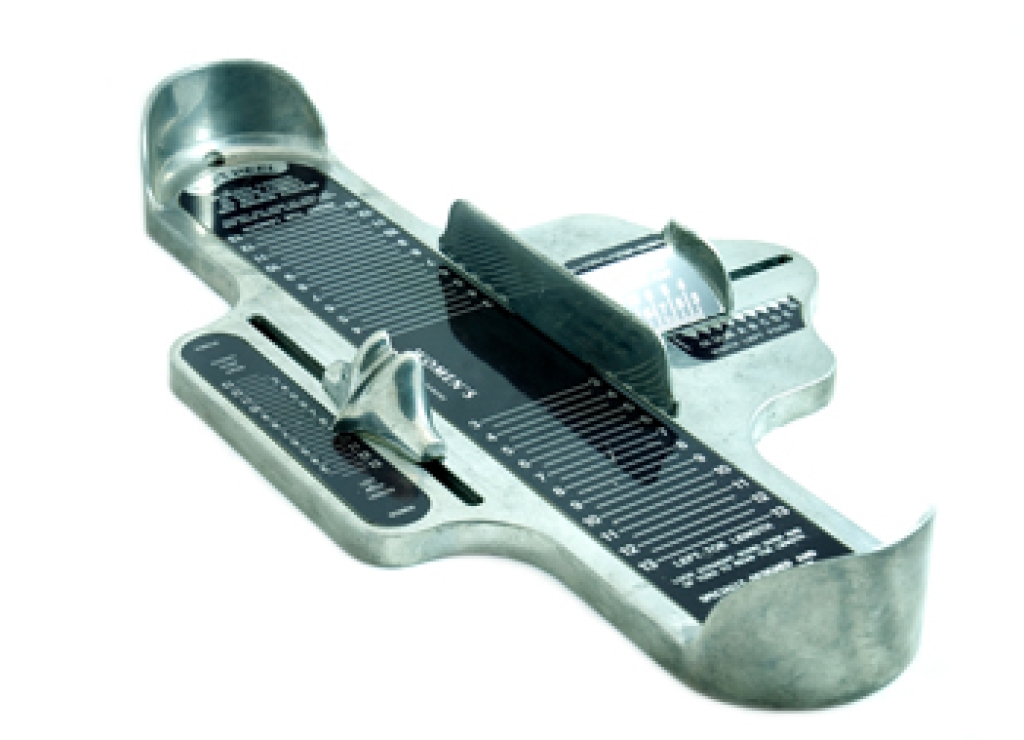
The Brannock device, a seemingly simple yet ingenious tool, is the key to accurately measuring shoe size. Invented in 1927 by Charles Brannock, it remains the industry standard for footwear fitting across the globe. The Brannock device consists of a metal platform with graduated scales for the length and width of the foot, a sliding pointer, and a movable heel cup. To determine shoe size, the individual places the heel against the heel cup and stretches the foot along the platform. The pointer slides to the tip of the longest toe, while the width scale ensures a comfortable fit. This measurement provides the foot's length and width, aiding in selecting the perfect size shoe and ensuring optimal comfort and support. The Brannock device remains an indispensable part of the shoe fitting process, guaranteeing a seamless experience for finding the ideal pair of shoes for every foot. If you would like additional information on how to select a proper shoe size, it is suggested that you confer with a podiatrist. 

Getting the right shoe size is an important part of proper foot health. Seek the assistance of one of our podiatrists from David A. Scalzo, DPM, PC and Associates. Our doctors will provide the care you need to keep you pain-free and on your feet.

Getting the Right Shoe Size

There are many people who wear shoes that are the incorrect size, negatively affecting their feet and posture. Selecting the right shoes is not a difficult process, so long as you keep several things in mind when it comes to choosing the right pair.

  • When visiting the shoe store, use the tools available to measure your foot.
  • Be sure there is ‘wiggle room’. There should be about an inch between your toes and the tip of your shoes.
  • Do not always assume you are the same size, as manufacturers run differently.
  • Purchase shoes later in the day, as your feet swell as the day progresses.
  • If a shoe is not comfortable, it is not suitable. Most shoes can’t be ‘broken in’, and comfort should be the ultimate goal when it comes to choosing the right pair of shoes

As our feet hold our body weight and keep us moving, it is important to treat them right. Picking the right pair of shoes can provide your feet comfort and mobility without pain.

If you have any questions, please feel free to contact our office located in Duryea, PA . We offer the newest diagnostic and treatment technologies for all your foot care needs.

Read more about Getting the Right Shoe Size: To Keep Your Feet Happy

Symptoms That May Indicate Gout

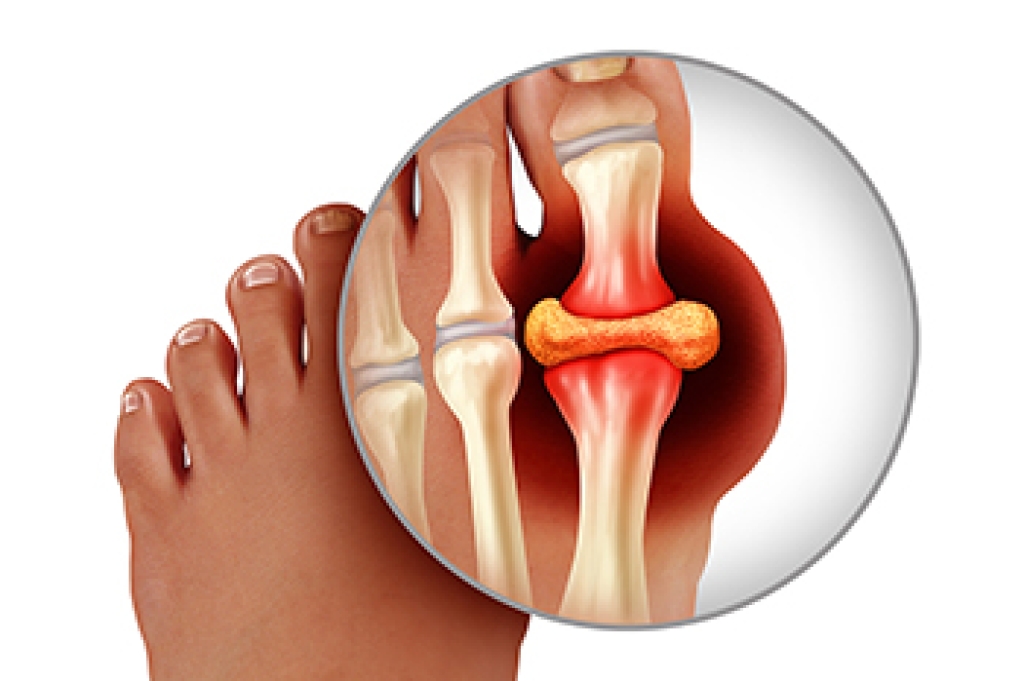
Gout is an inflammatory condition that causes extreme pain in the joints and is particularly common in the big toe. Patients with gout suffer from hyperuricemia, an overabundance of uric acid in the bloodstream. Uric acid then crystallizes, forming sharp, short needles that settle in the joint and cause extreme pain. Anyone can suffer from gout, but it is more common among men over the age of 30. Risk factors for gout are genetics, alcohol use, and a diet rich in foods that contain a high level of purines. These include red meat, seafood, and beverages made with alcohol or large amounts of sugar. The top indicator of gout in the big toe is severe pain. This may come on suddenly and typically occurs at night. The intense pain can linger for days. Swelling, tenderness, and redness are also hallmarks of gout. The skin on the toe may begin to peel and then become itchy and flaky. It also may begin to feel hot to the touch. In some cases, a low-grade fever develops, along with flu-like symptoms. If you believe you may have gout in the big toe, it is suggested that you make an appointment with a podiatrist who can offer treatment options.  

Gout is a painful condition that can be treated. If you are seeking treatment, contact one of our podiatrists from David A. Scalzo, DPM, PC and Associates. Our doctors will treat your foot and ankle needs.

What Is Gout?

Gout is a form of arthritis that is characterized by sudden, severe attacks of pain, redness, and tenderness in the joints. The condition usually affects the joint at the base of the big toe. A gout attack can occur at any random time, such as the middle of the night while you are asleep.

Symptoms

  • Intense Joint Pain - Usually around the large joint of your big toe, and it most severe within the first four to twelve hours
  • Lingering Discomfort - Joint discomfort may last from a few days to a few weeks
  • Inflammation and Redness -Affected joints may become swollen, tender, warm and red
  • Limited Range of Motion - May experience a decrease in joint mobility

Risk Factors

  • Genetics - If family members have gout, you’re more likely to have it
  • Medications - Diuretic medications can raise uric acid levels
  • Gender/Age - Gout is more common in men until the age of 60. It is believed that estrogen protects women until that point
  • Diet - Eating red meat and shellfish increases your risk
  • Alcohol - Having more than two alcoholic drinks per day increases your risk
  • Obesity - Obese people are at a higher risk for gout

Prior to visiting your podiatrist to receive treatment for gout, there are a few things you should do beforehand. If you have gout you should write down your symptoms--including when they started and how often you experience them, important medical information you may have, and any questions you may have. Writing down these three things will help your podiatrist in assessing your specific situation so that he or she may provide the best route of treatment for you.

If you have any questions, please feel free to contact our office located in Duryea, PA . We offer the newest diagnostic and treatment technologies for all your foot care needs.
Read more about Gout

Get Professional Care for a Broken Foot or Ankle

Constant care and regular evaluation are important for a foot or ankle fracture. If left untreated, foot or ankle fractures can worsen over time and create more serious problems.

Don't wait to be examined if you believe you've experienced a foot or ankle fracture.

How Flat Feet Affect Your Body

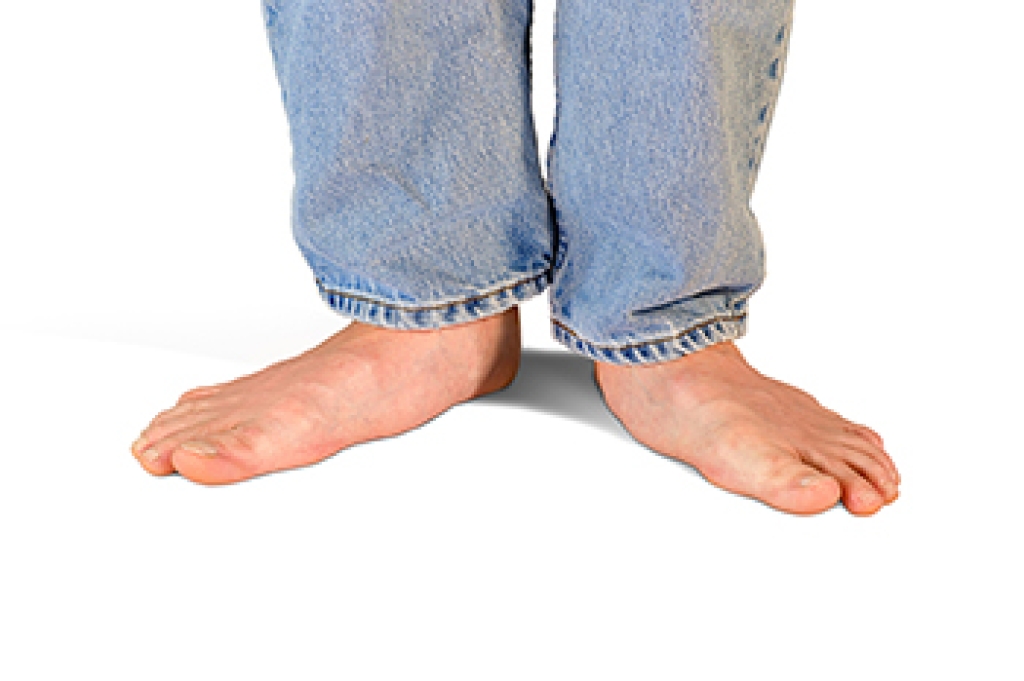
Flat feet can be easily recognized by the absence of an arch space while standing on the feet. Instead, the foot lies flat on the floor. Flat feet can lead to pain across the arch and heel, while ill-fitting shoes or exercising on hard surfaces may only make it worse. Because having flat feet can affect your movement, the chances of developing knee and hip pain can increase. Athletes with flat feet are at a higher risk of plantar fasciitis, Achilles tendonitis, and knee injuries. Fortunately, people with flat feet who are experiencing some type of pain can wear an orthotic device to correct the deficiency and improve their gait. A podiatrist can examine the feet to determine the severity of this condition and also test the way you walk to determine what type of proper orthotic device is right for you. This foot doctor will make a mold of your feet that perfectly mirrors their shape and builds an insole specifically for you. For more information on options to deal with flat feet, it is suggested that you make an appointment with a podiatrist. 

Flatfoot is a condition many people suffer from. If you have flat feet, contact one of our podiatrists from David A. Scalzo, DPM, PC and Associates. Our doctors will treat your foot and ankle needs.

What Are Flat Feet?

Flatfoot is a condition in which the arch of the foot is depressed and the sole of the foot is almost completely in contact with the ground. About 20-30% of the population generally has flat feet because their arches never formed during growth.

Conditions & Problems:

Having flat feet makes it difficult to run or walk because of the stress placed on the ankles.

Alignment – The general alignment of your legs can be disrupted, because the ankles move inward which can cause major discomfort.

Knees – If you have complications with your knees, flat feet can be a contributor to arthritis in that area.  

Symptoms

  • Pain around the heel or arch area
  • Trouble standing on the tip toe
  • Swelling around the inside of the ankle
  • Flat look to one or both feet
  • Having your shoes feel uneven when worn

Treatment

If you are experiencing pain and stress on the foot you may weaken the posterior tibial tendon, which runs around the inside of the ankle. 

If you have any questions, please feel free to contact our office located in Duryea, PA . We offer the newest diagnostic and treatment technologies for all your foot care needs.

Read more about Flat Feet

Connect With Us