Foot Problems Mistaken for Bunions

The assumption that any discomfort in the big toe signifies a bunion can lead to unnecessary surgeries. Beyond bunions, several foot conditions can mimic their symptoms. Big toe joint arthritis, characterized by bone spurs due to cartilage degeneration, is one example. While this ailment often causes pain and inflammation in the big toe, it typically affects the top of the joint. A ganglion cyst is a fluid-filled sac that can attach to the big toe joint, posing a diagnostic challenge. Gout, marked by intense pain and swelling from uric acid crystal deposits, can masquerade as a bunion due to similar symptoms. Bursitis, a painful inflammation of the bursa between the skin and bone, may also be mistaken as a bunion. For an accurate diagnosis of your big toe pain, it is suggested that you schedule an appointment with a podiatrist. Depending on the outcome of an exam, pain management or other medical interventions may be suggested. 

Toe pain can disrupt your daily activities. If you have any concerns, contact one of our podiatrists of David A. Scalzo, DPM, PC and Associates. Our doctors can provide the care you need to keep you pain-free and on your feet.

What Causes Toe Pain?

Most severe toe pain is caused due to a sports injury, trauma from dropping something heavy on the toe, or bumping into something rigid. Other problems can develop over time for various reasons.

Toe pain can be caused by one or more ailments. The most common include:

  • Trauma
  • Sports injury
  • Wearing shoes that are too tight
  • Arthritis
  • Gout
  • Corns and calluses
  • Hammertoe
  • Bunions
  • Blisters
  • Ingrown toenails
  • Sprains
  • Fractures (broken bones)
  • Dislocations

When to See a Podiatrist

  • Severe pain
  • Persistent pain that lasts more than a week
  • Signs of infection
  • Continued swelling
  • Pain that prevents walking

Diagnosis

In many cases the cause of toe pain is obvious, but in others, a podiatrist may want to use more advanced methods to determine the problem. These can range from simple visual inspections and sensation tests to X-rays and MRI scans. Prior medical history, family medical history, and any recent physical traumatic events will all be taken into consideration for a proper diagnosis.

Treatment

Treatments for toe pain and injuries vary and may include shoe inserts, padding, taping, medicines, injections, and in some cases, surgery. If you believe that you have broken a toe, please see a podiatrist as soon as possible.

If you have any questions please contact our office located in Duryea, PA . We offer the newest diagnostic and treatment technologies for all your foot and ankle needs.


Read more about Toe Pain

It's Time for Beautiful Feet

You don't need an excuse to have beautiful nails. Step outside without worrying about the appearance of your feet.

Foot Strengthening Exercises for Runners

In the world of running, the strength and flexibility of the feet often go unnoticed. From simple toe squish and toe splay exercises to deep squats and hip mobilization techniques, maintaining optimal foot function is essential for improving performance and avoiding injuries. These foot exercises not only strengthen the muscles and ligaments that support the arches, they also encourage proper alignment and biomechanics. Additionally, incorporating jumping exercises can enhance foot elasticity and running efficiency. Whether it's fine-tuning foot mechanics or overcoming injuries, a podiatrist's expertise can be indispensable for runners striving for peak performance and long-term foot health. It is suggested that you make an appointment with a podiatrist who can accurately diagnose any foot problems and offer treatment options to keep you running on the right path.

Exercising your feet regularly with the proper foot wear is a great way to prevent injuries and build strength. If you have any concerns about your feet, contact one of our podiatrists from David A. Scalzo, DPM, PC and Associates. Our doctors can provide the care you need to keep you pain-free and on your feet.

Exercise for Your Feet

Exercise for your feet can help you gain strength, mobility and flexibility in your feet. They say that strengthening your feet can be just as rewarding as strengthening another part of the body. Your feet are very important, and we often forget about them in our daily tasks. But it is because of our feet that are we able to get going and do what we need to. For those of us fortunate enough to not have any foot problems, it is an important gesture to take care of them to ensure good health in the long run.

Some foot health exercises can include ankle pumps, tip-toeing, toe rises, lifting off the floor doing reps and sets, and flexing the toes. It is best to speak with Our doctors to determine an appropriate regimen for your needs. Everyone’s needs and bodies are different, and the activities required to maintain strength in the feet vary from individual to individual. 

Once you get into a routine of doing regular exercise, you may notice a difference in your feet and how strong they may become.

If you have any questions, please feel free to contact our office located in Duryea, PA . We offer the newest diagnostic and treatment technologies for all your foot care needs.

Read more about Exercise for Your Feet

Injury Prevention for Runners

All runners are susceptible to a range of foot injuries stemming from the repetitive nature of running and other factors. Neglecting flexibility training can lead to decreased range of motion and increased risk of injuries such as strains and tears. Cross-training, incorporating activities like swimming or cycling, can mitigate these risks by engaging different muscle groups and reducing overuse injuries. Additionally, a balanced approach to fitness will help prevent foot injuries. Podiatrists play a significant role in this respect, offering expertise in foot and lower limb biomechanics, gait analysis, and injury prevention. They can guide proper footwear selection, orthotic devices, and personalized exercise regimens to address individual needs and reduce injury risk. If you are a runner, it is suggested that you make an appointment with a podiatrist to learn more about injury prevention in running so you can enjoy this port for the long term.

Exercising your feet regularly with the proper foot wear is a great way to prevent injuries. If you have any concerns about your feet, contact one of our podiatrists of David A. Scalzo, DPM, PC and Associates. Our doctors will treat your foot and ankle needs.

How to Prevent Running Injuries

Many common running injuries are caused by overuse and overtraining. When the back of the kneecap starts wearing out and starts causing pain in your knee, this is commonly referred to as runner’s knee. Runner’s knee is a decrease in strength in your quadriceps and can occur if you’re not wearing properly fitted or supporting shoes. To prevent runner’s knee, focusing on hip strengthening is a good idea, as well as strengthening your quads to keep the kneecaps aligned.

What Are Some Causes of Running Injuries? 
- One cause of a common running injury is called iliotibial band syndrome.
- Plantar fasciitis is also another common injury.
- Stress fractures can occur from overtraining, lack of calcium, or even your running style.

Best Ways to Prevent Running Injuries
- Wear footwear that fits properly and suits your running needs.
- Running shoes are the only protective gear that runners have to safeguard them from injury.
- Make a training schedule. Adding strengthening exercises as well as regular stretching can help keep you strong and limber and can lessen the possibility of injuries.
- Stretching keeps muscles limber; this will help you gain better flexibility.

If you have any questions, please feel free to contact our office located in Duryea, PA . We offer the newest diagnostic and treatment technologies for all your foot care needs.

Read more about How to Prevent Running Injuries

Common Causes of Plantar Fasciitis

Plantar fasciitis, a common cause of heel pain, can arise from various factors related to foot mechanics, lifestyle, and health conditions. One primary cause is repetitive strain on the plantar fascia, the thick band of tissue that supports the arch of the foot. Activities such as running, walking, or standing for prolonged periods can put stress on the plantar fascia, leading to microtears and inflammation. Poor foot mechanics, including high arches, flat feet, or abnormal walking patterns, can also contribute to the development of plantar fasciitis by placing excess strain on the plantar fascia. Additionally, wearing unsupportive footwear or suddenly increasing activity levels can exacerbate the condition. Certain risk factors such as obesity, age, and occupations that require standing or walking for extended periods of time can increase susceptibility to plantar fasciitis. If you have heel pain, it is strongly suggested that you are under the care of a podiatrist who can effectively treat plantar fasciitis.

Plantar fasciitis is a common foot condition that is often caused by a strain injury. If you are experiencing heel pain or symptoms of plantar fasciitis, contact one of our podiatrists from David A. Scalzo, DPM, PC and Associates. Our doctors can provide the care you need to keep you pain-free and on your feet.

What Is Plantar Fasciitis?

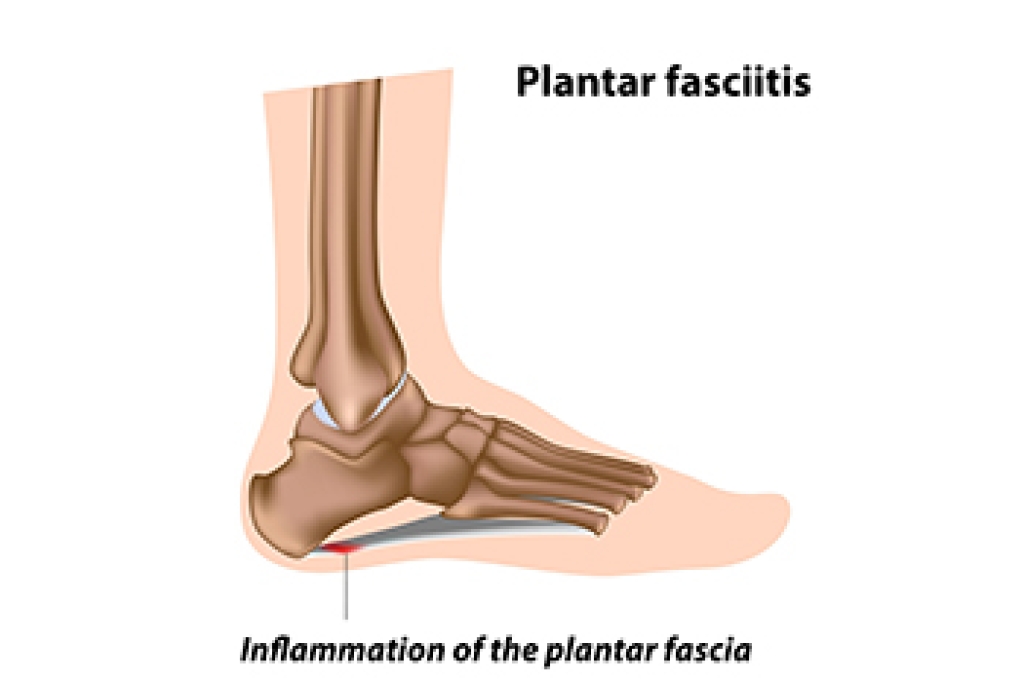
Plantar fasciitis is one of the most common causes of heel pain. The plantar fascia is a ligament that connects your heel to the front of your foot. When this ligament becomes inflamed, plantar fasciitis is the result. If you have plantar fasciitis you will have a stabbing pain that usually occurs with your first steps in the morning. As the day progresses and you walk around more, this pain will start to disappear, but it will return after long periods of standing or sitting.

What Causes Plantar Fasciitis?

  • Excessive running
  • Having high arches in your feet
  • Other foot issues such as flat feet
  • Pregnancy (due to the sudden weight gain)
  • Being on your feet very often

There are some risk factors that may make you more likely to develop plantar fasciitis compared to others. The condition most commonly affects adults between the ages of 40 and 60. It also tends to affect people who are obese because the extra pounds result in extra stress being placed on the plantar fascia.

Prevention

  • Take good care of your feet – Wear shoes that have good arch support and heel cushioning.
  • Maintain a healthy weight
  • If you are a runner, alternate running with other sports that won’t cause heel pain

There are a variety of treatment options available for plantar fasciitis along with the pain that accompanies it. Additionally, physical therapy is a very important component in the treatment process. It is important that you meet with your podiatrist to determine which treatment option is best for you.

If you have any questions, please feel free to contact our office located in Duryea, PA . We offer the newest diagnostic and treatment technologies for all your foot care needs.


Read more about Plantar Fasciitis

Connect With Us