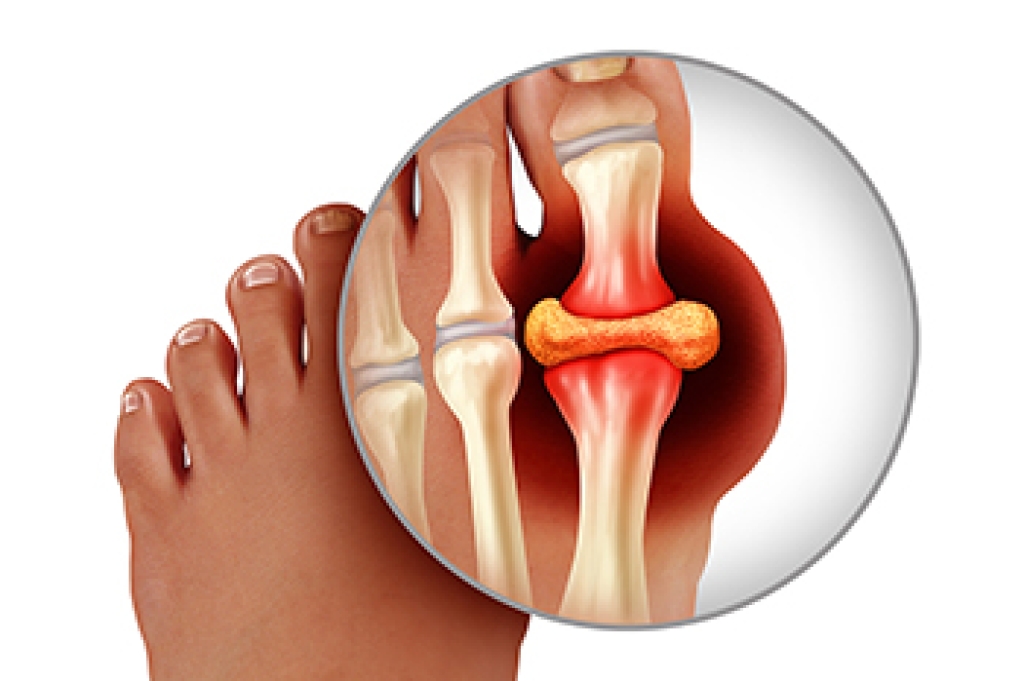
Symptoms That May Indicate Gout

Gout is an inflammatory condition that causes extreme pain in the joints and is particularly common in the big toe. Patients with gout suffer from hyperuricemia, an overabundance of uric acid in the bloodstream. Uric acid then crystallizes, forming sharp, short needles that settle in the joint and cause extreme pain. Anyone can suffer from gout, but it is more common among men over the age of 30. Risk factors for gout are genetics, alcohol use, and a diet rich in foods that contain a high level of purines. These include red meat, seafood, and beverages made with alcohol or large amounts of sugar. The top indicator of gout in the big toe is severe pain. This may come on suddenly and typically occurs at night. The intense pain can linger for days. Swelling, tenderness, and redness are also hallmarks of gout. The skin on the toe may begin to peel and then become itchy and flaky. It also may begin to feel hot to the touch. In some cases, a low-grade fever develops, along with flu-like symptoms. If you believe you may have gout in the big toe, it is suggested that you make an appointment with a podiatrist who can offer treatment options.  

Gout is a painful condition that can be treated. If you are seeking treatment, contact one of our podiatrists from David A. Scalzo, DPM, PC and Associates. Our doctors will treat your foot and ankle needs.

What Is Gout?

Gout is a form of arthritis that is characterized by sudden, severe attacks of pain, redness, and tenderness in the joints. The condition usually affects the joint at the base of the big toe. A gout attack can occur at any random time, such as the middle of the night while you are asleep.

Symptoms

  • Intense Joint Pain - Usually around the large joint of your big toe, and it most severe within the first four to twelve hours
  • Lingering Discomfort - Joint discomfort may last from a few days to a few weeks
  • Inflammation and Redness -Affected joints may become swollen, tender, warm and red
  • Limited Range of Motion - May experience a decrease in joint mobility

Risk Factors

  • Genetics - If family members have gout, you’re more likely to have it
  • Medications - Diuretic medications can raise uric acid levels
  • Gender/Age - Gout is more common in men until the age of 60. It is believed that estrogen protects women until that point
  • Diet - Eating red meat and shellfish increases your risk
  • Alcohol - Having more than two alcoholic drinks per day increases your risk
  • Obesity - Obese people are at a higher risk for gout

Prior to visiting your podiatrist to receive treatment for gout, there are a few things you should do beforehand. If you have gout you should write down your symptoms--including when they started and how often you experience them, important medical information you may have, and any questions you may have. Writing down these three things will help your podiatrist in assessing your specific situation so that he or she may provide the best route of treatment for you.

If you have any questions, please feel free to contact our offices located in Duryea and Bangor, PA . We offer the newest diagnostic and treatment technologies for all your foot care needs.
Read more about Gout

Get Professional Care for a Broken Foot or Ankle

Constant care and regular evaluation are important for a foot or ankle fracture. If left untreated, foot or ankle fractures can worsen over time and create more serious problems.

Don't wait to be examined if you believe you've experienced a foot or ankle fracture.

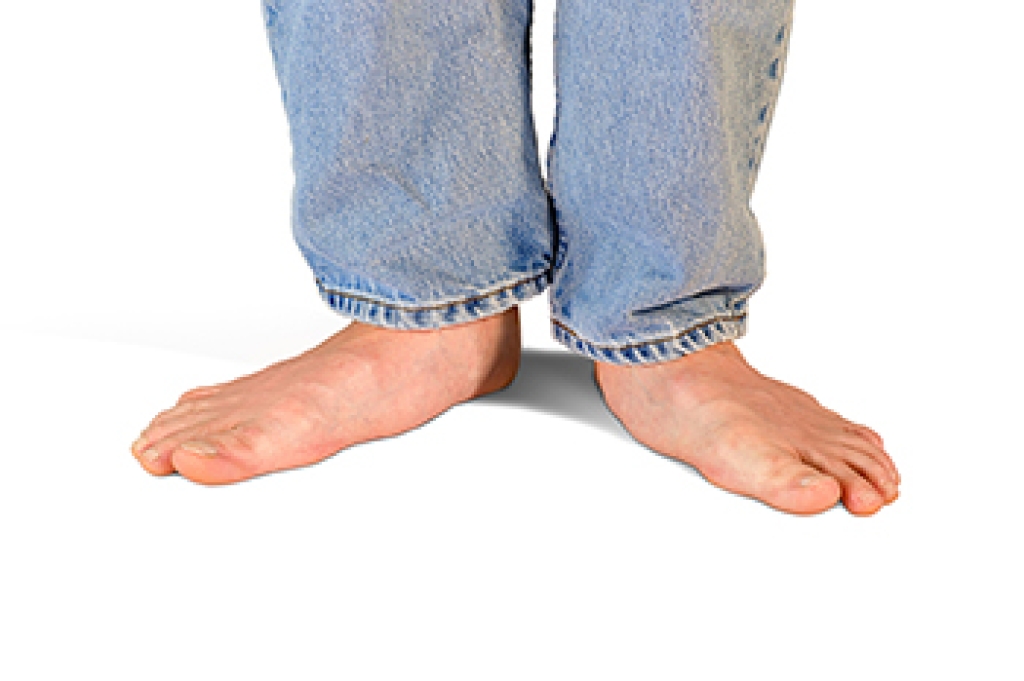
How Flat Feet Affect Your Body

Flat feet can be easily recognized by the absence of an arch space while standing on the feet. Instead, the foot lies flat on the floor. Flat feet can lead to pain across the arch and heel, while ill-fitting shoes or exercising on hard surfaces may only make it worse. Because having flat feet can affect your movement, the chances of developing knee and hip pain can increase. Athletes with flat feet are at a higher risk of plantar fasciitis, Achilles tendonitis, and knee injuries. Fortunately, people with flat feet who are experiencing some type of pain can wear an orthotic device to correct the deficiency and improve their gait. A podiatrist can examine the feet to determine the severity of this condition and also test the way you walk to determine what type of proper orthotic device is right for you. This foot doctor will make a mold of your feet that perfectly mirrors their shape and builds an insole specifically for you. For more information on options to deal with flat feet, it is suggested that you make an appointment with a podiatrist. 

Flatfoot is a condition many people suffer from. If you have flat feet, contact one of our podiatrists from David A. Scalzo, DPM, PC and Associates. Our doctors will treat your foot and ankle needs.

What Are Flat Feet?

Flatfoot is a condition in which the arch of the foot is depressed and the sole of the foot is almost completely in contact with the ground. About 20-30% of the population generally has flat feet because their arches never formed during growth.

Conditions & Problems:

Having flat feet makes it difficult to run or walk because of the stress placed on the ankles.

Alignment – The general alignment of your legs can be disrupted, because the ankles move inward which can cause major discomfort.

Knees – If you have complications with your knees, flat feet can be a contributor to arthritis in that area.  

Symptoms

  • Pain around the heel or arch area
  • Trouble standing on the tip toe
  • Swelling around the inside of the ankle
  • Flat look to one or both feet
  • Having your shoes feel uneven when worn

Treatment

If you are experiencing pain and stress on the foot you may weaken the posterior tibial tendon, which runs around the inside of the ankle. 

If you have any questions, please feel free to contact our offices located in Duryea and Bangor, PA . We offer the newest diagnostic and treatment technologies for all your foot care needs.
Read more about Flat Feet

Understanding Polydactyly

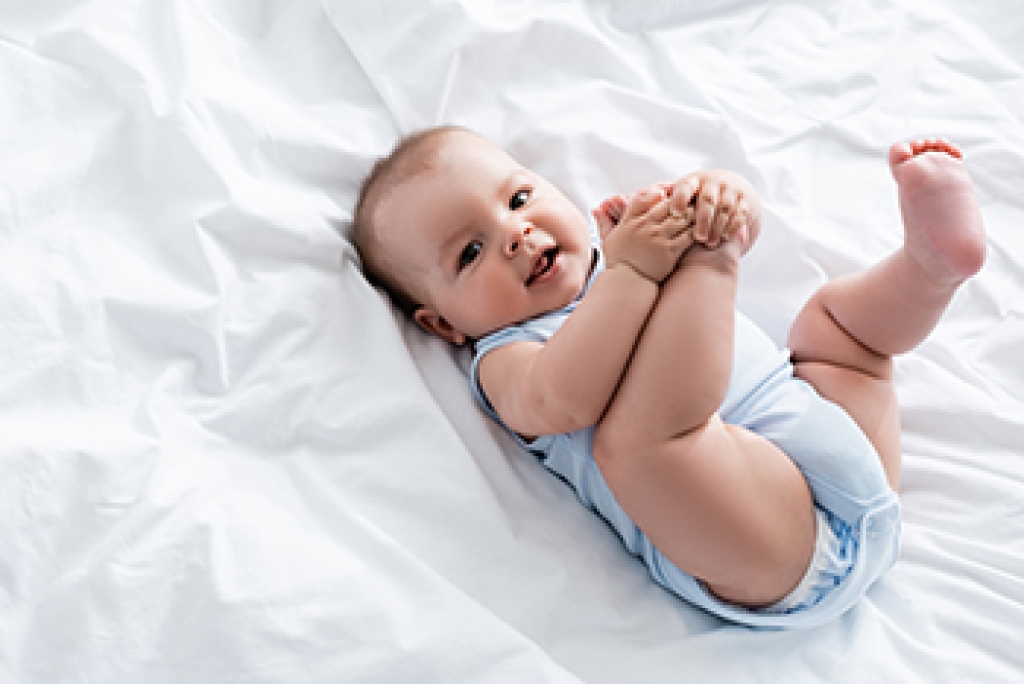
Polydactyly is a congenital foot defect where a child is born with extra fingers or toes. The name comes from a combination of Greek words, “poly” for many and “dactylos” for digits. There are different types of polydactyly of the feet. The most frequent form is an extra toe next to the fifth toe. The extra digit can be complete and fully functional or partially formed with some bone. It can also present as a small mass of soft tissue. When polydactyly occurs without other abnormalities, it is referred to as isolated or non-syndromic polydactyly. When there is another genetic condition present, such as a cognitive and developmental abnormality, it is called syndromic polydactyly. This condition tends to be hereditary and can occur from genetic mutations and environmental reasons. The left foot is most often affected and is twice as common among males. Treatment for polydactyly is dependent on where the extra toe is. Surgery to remove the extra toe is frequently done in the first two years of a child’s life to allow typical use of the foot and a better ability to fit into shoes. If you have a baby born with polydactyly, it is strongly suggested that you take them to a podiatrist as soon as possible who can consult with you on the best way to treat this condition.

Congenital foot problems require immediate attention to avoid future complications. If you have any concerns, contact one of our podiatrists of David A. Scalzo, DPM, PC and Associates. Our doctors can provide the care you need to keep you pain-free and on your feet.

Congenital foot problems are deformities affecting the feet, toes, and/or ankles that children are born with. Some of these conditions have a genetic cause while others just happen. Some specific foot ailments that children may be born with include clubfeet, polydactyly/macrodactyly, and cleft foot. There are several other foot anomalies that can occur congenitally. What all of these conditions have in common is that a child may experience difficulty walking or performing everyday activities, as well as trouble finding footwear that fits their foot deformity. Some of these conditions are more serious than others. Consulting with a podiatrist as early as possible will help in properly diagnosing a child’s foot condition while getting the necessary treatment underway.

What are Causes of Congenital Foot Problem?

A congenital foot problem is one that happens to a child at birth. These conditions can be caused by a genetic predisposition, developmental or positional abnormalities during gestation, or with no known cause.

What are Symptoms of Congenital Foot Problems?

Symptoms vary by the congenital condition. Symptoms may consist of the following:

  • Clubfoot, where tendons are shortened, bones are shaped differently, and the Achilles tendon is tight, causing the foot to point in and down. It is also possible for the soles of the feet to face each other.
  • Polydactyly, which usually consists of a nubbin or small lump of tissue without a bone, a toe that is partially formed but has no joints, or an extra toe.
  • Vertical talus, where the talus bone forms in the wrong position causing other bones in the foot to line up improperly, the front of the foot to point up, and the bottom of the foot to stiffen, with no arch, and to curve out.
  • Tarsal coalition, when there is an abnormal connection of two or more bones in the foot leading to severe, rigid flatfoot.
  • Cleft foot, where there are missing toes, a V-shaped cleft, and other anatomical differences.
  • Macrodactyly, when the toes are abnormally large due to overgrowth of the underlying bone or soft tissue.

Treatment and Prevention

While there is nothing one can do to prevent congenital foot problems, raising awareness and receiving neonatal screenings are important. Early detection by taking your child to a podiatrist leads to the best outcome possible.

If you have any questions, please feel free to contact our offices located in Duryea and Bangor, PA . We offer the newest diagnostic and treatment technologies for all your foot care needs.
Read more about Congenital Foot Problems

Wearing High Heels Can Cause Foot Problems

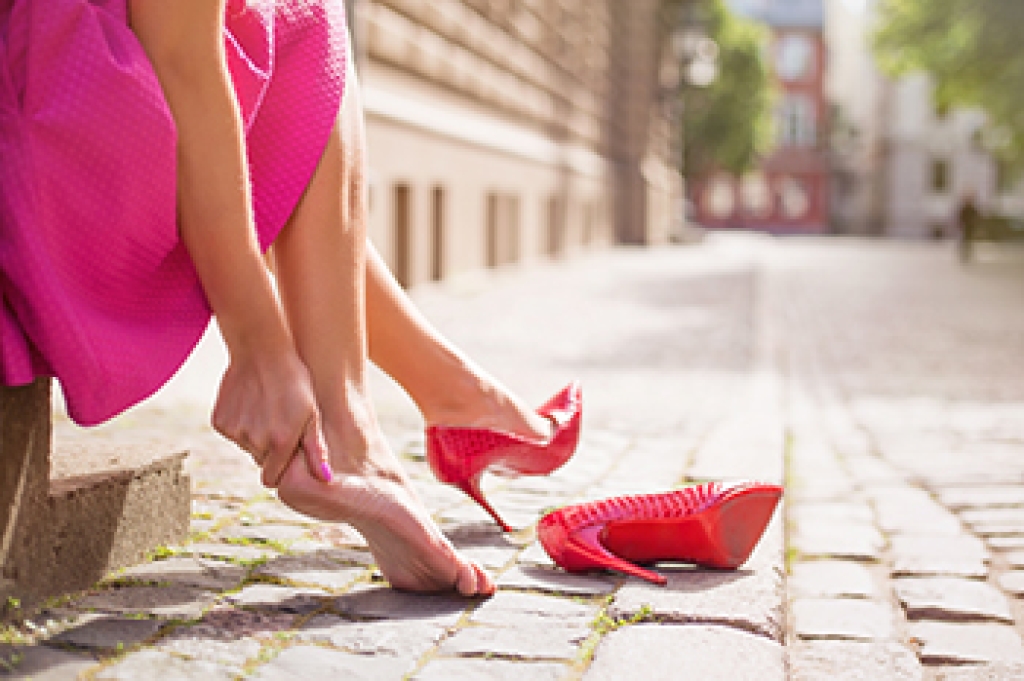
High-heeled shoes are the cause of many foot problems, and experts agree the higher the heel, the worse they are for your feet. When high heeled shoes also have a narrow and pointy toe box, they may become even more destructive. Add to that strappy sandals with minimal support and thin soles, and the situation worsens. Specifically, high heels force the weight of the body onto the metatarsals and sesamoid bones of the feet. This excess pressure in turn causes inflammation of the surrounding nerves. In some cases, hairline breaks in the bones, called stress fractures, can develop. In addition, the likelihood of tripping and spraining an ankle increases while wearing high heels. The answer may be simply changing your footwear or limiting the amount of time spent wearing high heels. Shoes with heels no higher than two inches are thought to be less harmful. Look for shoes with a wider toe box that allows freedom of movement for the toes and thicker heels for increased stability. For help with foot problems stemming from wearing high heels long term, it is suggested that you make an appointment with a podiatrist.

High heels have a history of causing foot and ankle problems. If you have any concerns about your feet or ankles, contact one of our podiatrists from David A. Scalzo, DPM, PC and Associates. Our doctors can provide the care you need to keep you pain-free and on your feet.

Effects of High Heels on the Feet

High heels are popular shoes among women because of their many styles and societal appeal.  Despite this, high heels can still cause many health problems if worn too frequently.

Which Parts of My Body Will Be Affected by High Heels?

  • Ankle Joints
  • Achilles Tendon – May shorten and stiffen with prolonged wear
  • Balls of the Feet
  • Knees – Heels cause the knees to bend constantly, creating stress on them
  • Back – They decrease the spine’s ability to absorb shock, which may lead to back pain.  The vertebrae of the lower back may compress.

What Kinds of Foot Problems Can Develop from Wearing High Heels?

  • Corns
  • Calluses
  • Hammertoe
  • Bunions
  • Morton’s Neuroma
  • Plantar Fasciitis

How Can I Still Wear High Heels and Maintain Foot Health?

If you want to wear high heeled shoes, make sure that you are not wearing them every day, as this will help prevent long term physical problems.  Try wearing thicker heels as opposed to stilettos to distribute weight more evenly across the feet.  Always make sure you are wearing the proper shoes for the right occasion, such as sneakers for exercising.  If you walk to work, try carrying your heels with you and changing into them once you arrive at work.  Adding inserts to your heels can help cushion your feet and absorb shock. Full foot inserts or metatarsal pads are available. 

If you have any questions, please feel free to contact our offices located in Duryea and Bangor, PA . We offer the newest diagnostic and treatment technologies for all your foot care needs.

Read more about Why High Heels Are Not Ideal for Healthy Feet

Connect With Us